
Nyamplung
The name used in Indonesia for this tropical tree and its connected planting and material pathways.
Nyamplung (Calophyllum inophyllum), internationally known as Tamanu, is a tropical tree connecting planting material, seeds, natural oil, productive landscapes and emerging bio-based applications.
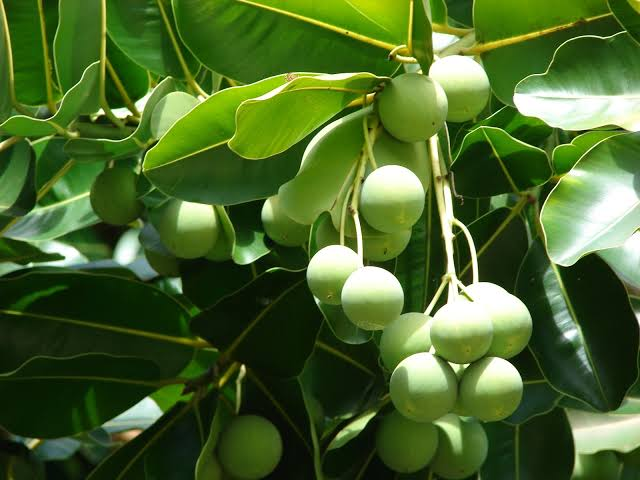
Nyamplung is the Indonesian name for a tropical evergreen tree known internationally as Tamanu. Its botanical structure connects leaves, flowers, fruit, seeds, kernels, shell, oil and biomass into a single living system.
The name used in Indonesia for this tropical tree and its connected planting and material pathways.
A widely used international name, particularly in conversations about the tree’s natural seed oil.
The scientific name that identifies the same species across research, cultivation and trade.
Natural regeneration has been documented in Nyamplung stands at Wanagama I, Gunungkidul. In cultivation, regeneration and nursery practice are considered together with seed quality, site conditions and management.
Fruit can produce seed, followed by germination, seedlings, young trees and mature trees. Each stage has different survival needs and is influenced by local growing conditions.
Research on natural regeneration helps describe how seedlings and later stages occur in a stand. It is useful context for seed collection, nursery planning and field establishment, but does not replace site-specific planting design.
Nyamplung can be understood through the connected values that begin with a tree and extend across cultivation, materials, research and productive landscapes.
Seed source, propagation, seedlings and field planting.
Fruit, seeds, kernels and raw-material pathways.
Kernel preparation, extraction and Calophyllum inophyllum Seed Oil.
Biofuel research, biomass, biochar and residual-material utilization.
Agroforestry, restoration, productive landscapes and monitoring.
The word “seed” can mean different things in different contexts. On this page, the distinction is kept clear: seed as planting material and seed or kernel as an industrial raw material are related, but they serve different decisions.
For cultivation, seeds are evaluated in relation to source, handling, germination and nursery requirements before seedlings are prepared for field planting.
For downstream pathways, fruit yields seed and kernel material that may be prepared for oil processing, research or further material development.
A material pathway for studying oil-based and value-added applications. Product suitability depends on processing, specification and intended use.
Shell and other biomass streams can be examined for biomass and biochar pathways. These are development topics, not a current product claim.
Residual materials may be studied for value-added applications within a circular-bioeconomy approach.
BRIN and other Indonesian research discussions identify Nyamplung as a non-food oil-bearing species for biodiesel, biohydrocarbon and SAF / bioavtur research pathways.
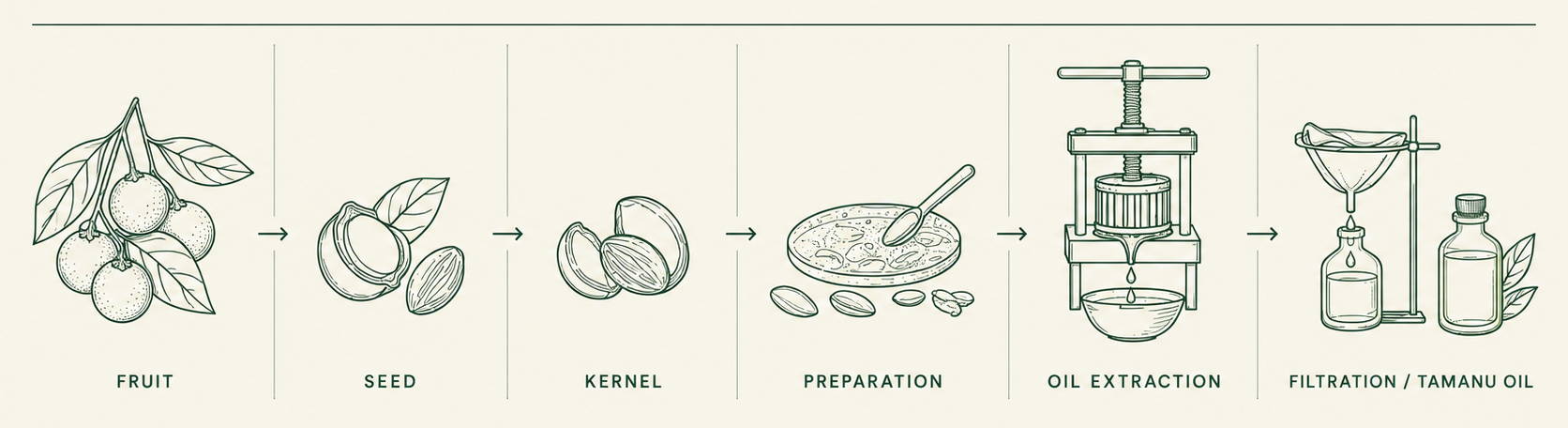
Nyamplung kernels can be prepared and processed into Tamanu Oil, also known as Calophyllum inophyllum Seed Oil. The oil pathway begins with the fruit and follows a careful material sequence.
Nyamplung can connect seed sources and nursery development with field establishment and longer-term productive landscape opportunities.
From planting and early growth to productive landscapes, Tamanu raw materials and long-term bioeconomic value, Nyamplung develops through multiple stages over time.
Illustrative lifecycle pattern — not a financial forecast.
Site preparation, seedling establishment and field planting build the biological foundation of the landscape. Commercial output is not expected at this stage.
Early tree growth is supported by maintenance and field management. Intercropping may be considered according to the planting design and local conditions; it is not a guaranteed revenue pathway.
The tree canopy and trunk continue to develop while monitoring supports site management. Early fruit and seed development may be observed, without a fixed production guarantee.
Fruit, seeds, kernels and Tamanu Oil can become relevant pathways as trees enter a productive phase. Productivity depends on genetics, site conditions and management.
A mature tree can support multi-value pathways across fruit, seeds, Tamanu Oil, biomass and bio-based derivatives within an established productive landscape.
Long-term tree cover can continue to support fruit production, bioeconomy applications, biomass and productive landscape value alongside ecological functions and monitoring.
Carbon outcomes depend on tree age, biomass, planting density, survival, site conditions, management, monitoring and methodology.
Nyamplung connects biological growth with planting, raw materials, productive landscapes and long-term bioeconomic opportunities.
Nyamplung.com connects Indonesian Nyamplung opportunities across nursery development, planting, seed supply, raw material, oil processing, research and commercial discussions.
Our orientation is to support practical conversations with domestic and international buyers, partners and project teams.
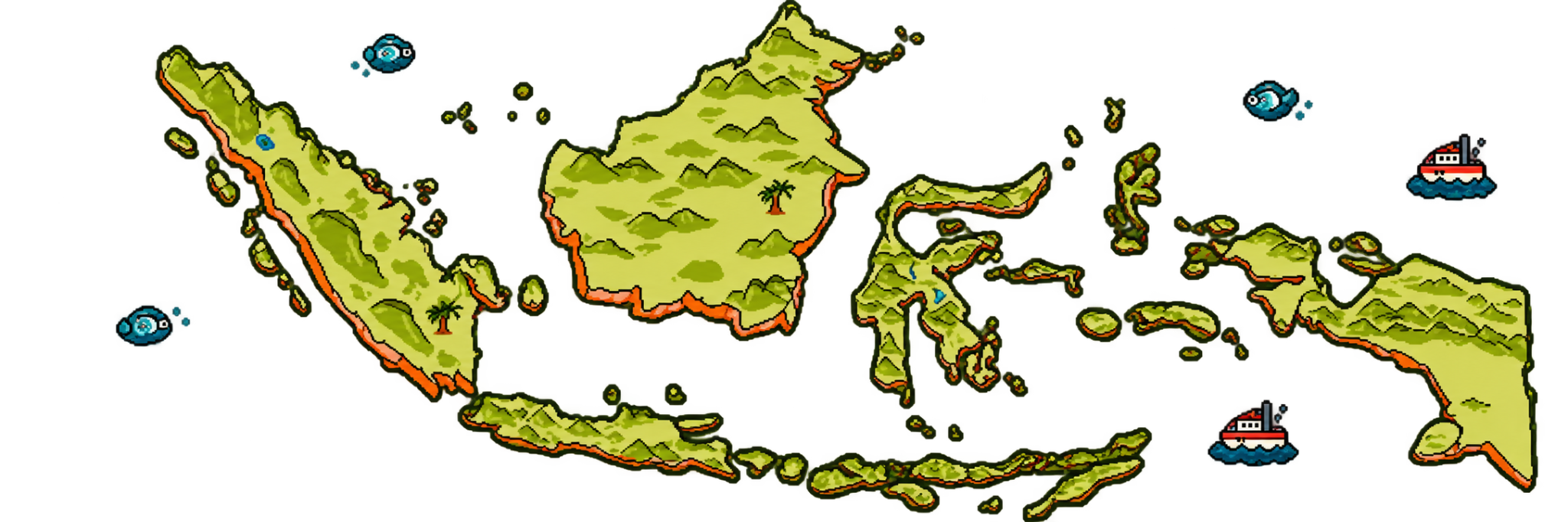
Nyamplung can form part of plantation, agroforestry, restoration and coastal or watershed landscape pathways when considered in the context of a site and its management.
Environmental outcomes depend on site conditions, survival, tree growth, planting design, management, monitoring and the methodology applied.
The carbon relevance of a Nyamplung landscape cannot be reduced to a fixed per-tree claim. Scientific studies measure specific trees in specific conditions; their results should be read with the method, site and timeframe in view.
Carbon outcomes can depend on tree age, diameter, height, biomass, density, survival, site, soil, management, monitoring and the methodology applied. The cited CO₂ study is presented here as a species-specific research reference, not as a universal performance claim.
This page synthesizes publicly available sources and internal knowledge materials for orientation. These organisations and publications are research sources, not represented as Nyamplung.com partners.
Reference context for Nyamplung’s energy and value-chain discussions.
EXPLORE RESEARCH ↗Indonesian research communication on Nyamplung, biofuel potential and land-recovery context.
EXPLORE RESEARCH ↗Research reference on the natural regeneration potential of Nyamplung in Wanagama I, Gunungkidul.
EXPLORE RESEARCH ↗Species-specific study context for CO₂ absorption in an urban-forest setting, interpreted with method and site limitations.
RETURN TO BOTANICAL IDENTITY ↑Discuss planting material for nursery, field establishment and project requirements.
MAKE AN INQUIRY ↗Discuss Nyamplung seeds for cultivation, research or raw-material requirements.
MAKE AN INQUIRY ↗Share your intended application and commercial requirements for Nyamplung Oil.
MAKE AN INQUIRY ↗Talk with our team about Nyamplung nursery and landscape development pathways.
MAKE AN INQUIRY ↗